Getting Dill-Pilled: My Year of Annie Dillard

When a famous writer dies, it's hard to quantify its meaning. Unless you knew them personally, studied with them, or waited in line after a reading to shake their hand, exchange pleasantries, and maybe take a selfie, they're not really real to you. Their existence has solely been through their words on a page, read to you in your own voice in your own head. Writers in this way become more you than they are themselves out in the real world. They take on this ethereal, omnipresent quality, irrelevant if they are actually alive or dead, for they are both of these things to you⏤always alive on the page, dead outside of it. So, when you receive news that a writer you admire has passed, one that you've only read and never met, you sigh, say how sad, and cherish the place where they will remain alive to you⏤their work.
Sometimes your sense of these things can be a bit off. I remember when I first discovered David Foster Wallace from buying an old copy of Infinite Jest in a used bookstore. After reading the first fifty pages, I was excited by it, but felt I wasn't ready for it (plus I was in a phase of only reading writers' debut novels) so I googled him to check out more of his stuff, only to discover he'd already been dead for six years. The opposite was the case for Annie Dillard. After ripping through two of her books, which felt classic and timeless, I had felt I was in the presence of some wise, great dead author, someone who long ago touched god when the rest of civilization went on to be doomed by the internet. But nope, I was elated to discover she was still kicking at 81, living in Massachusetts.
Like with most things in literature (i.e. not knowing who DFW was until 2015) and life generally, I came late to her work. It was just last year, the second half of the fall semester in my second year of grad school (at 35, by the way) in Geoff Dyer's Unusual Works of Nonfiction course, a six week masterclass of reading two books per week. Aside from being taught by Dyer, I was drawn to the syllabus because I have some serious blind spots when it comes to nonfiction and this seemed like a great introductory to all things non-memoir. Week one was Dillard's Pilgrim at Tinker Creek paired with her essay collection Teaching a Stone to Talk. I hadn't read anything by her before then, had maybe seen in her name in passing (when revisiting this Alexander Chee essay, I vaguely recalled reading it before, but never followed up on her).
Because it wasn't my only course and not my only reading for the week, which was usually anywhere from two to four books per week during the semester, I had forty-eight hours to read both Pilgrim and Teaching. To spare insanity and drugs I was too scared to try, I opted to just read Pilgrim, which at 308 pages, seemed manageable. I had no idea what I was in for. It wasn't long before I started to question what I was enduring. Was this fiction? Nature writing? Gospel? The answer I would later find would be yes. I was transfixed by Dillard's prose, synapses on fire with the great lyrical leaps she made on every page, every paragraph. From zooming way in to microorganisms to zooming out to God's own mad loomer senses. I was rapt by her metaphors, images, her humor and her verbs⏤my god, her verbs! An example, of many:
"The day it was dark inside the cottage, as usual; the five windows framed five films of the light and living world. I crunched to the creekside window, walking on the layer of glass shards on the floor, and stood to watch the creek lurch over the dam and round the shaded bend under the cliff, while bumblebees the size of ponies fumbled in the fragrant flowers that flecked the bank."
I binged her wild anecdotes of indigenous eskimos and muskrat behaviors, her descriptions of light and color and air and clouds, reveled in her mythical tone that somehow balanced grandiosity with a humble self-deprecation. She knew everything and nothing. She swindled the world for miracles, seemed able to cast aside its curtain of mystery to see trees with lights in them and frog skins floating like ghosts in the creek while at the same time seemed in constant fear and doubt, never knowing when or if she would be dazzled again. Nature had its way of putting her in her place, and she had a way of putting it into words.
During that day of reading, I felt as if she had reached inside of me and gripped my soul, shaking it awake, calling it out to escape its walls of self and body and run free out in the natural world. I couldn't sit still. I paced as I read. The walls of my Harlem apartment seemed more dense than ever before, closing in on me page by page. How could I continue to be inside, I felt, when there is so much I'm missing out on OUTSIDE. There were birds out there, didn't I know? And grass and bugs and trees! Trees! I later joked in class that the book made me feel like running out of my apartment every twenty minutes to look at a tree. Dyer raised both hands enthusiastically, laid back in his cool British pose, feet out on their heels in front him, hair tussled, wide-eyed, agreeing that Dillard's prose was some intersection between psychedelic, genius, and insane.
Even though I was joking, this was what Pilgrim had done. It had opened me up and helped me see. In the days after reading, I was walking slower to campus, tracing details of cloud lines, admiring spindles of pine bushes on West 138th and Amsterdam, tracking birdcalls, and watching the wind. In her chapter on seeing, she writes about how in adulthood our facility for language affects our ability to see as we once did as children, how we know too much, too many labels for things, so we walk around seeing defined things. To get herself to see again, to feel the awe of childhood again, she forced herself to try to see things anew. "So I blurred my eyes," she writes, "and gazed towards the brim of my hat and saw a new world. I saw the pale white circles roll up, roll up, like the world's turning, mute and perfect, and I saw the linear flashes, gleaming silver, like stars being born at random down a rolling scroll of time..."
"Something broke and something opened. I filled up like a new wineskin. I breathed an air like light; I saw a light like water. I was the lip of a fountain the creek filled forever; I was ether, the leaf in the zephyr; I was flesh-flake, feather, bone. When I see this way I see truly. As Thoreau says, I return to my senses."
Dillard helped me return to my senses. Her call to action was inviting. Where Thoreau and Emerson's call seemed beyond me, Dillard stated it plainly: forget seeing the world, get out in your backyard, your neighborhood and find the world there. Hers was a call for attention and focus, intention and discipline, an erasing of one's ego to be reduced down to a floating eyeball in nature (Emerson). I need not opine on why this struck a chord in the year 2026, in the same way it did in the Back-to-Nature days of the '60s.

Dyer's class was October 21st. Three days later, my roommate Ryan, a fellow Dillard disciple, had gifted me her book The Writing Life for my birthday. He owned a few of her other books, and late into the night we'd share favorite passages. It became our best non sequiturs. He'd be supine on the couch and I'd erupt from my office, "Did you know eskimos would dip the blades of their spears with blubber then leave them in the snow to freeze as a way to hunt wolves, who would slowly bleed out to their deaths from licking the frozen blades?" Or I'd be hanging out the window with a cigarette, as he sat across the room from me sermoning pages from her perplexing book, For the Time Being.
In the following weeks, I would recount the class discussion and Pilgrim with the fondness of remembering a night out with friends, the mania long since passed with a faint impression of having experienced living left in its place. The rest of the semester's reading piled up (though I managed to sneak in Teaching a Stone to Talk), and my vividness of the experience dulled with the season. I went back to my normal sense of seeing. Dillard wrote about this, too, how one would go insane if they tried to see as a child saw all day long, that instead, to see, "The effort is really a discipline requiring a lifetime of dedicated struggle..." She laid out life as this tug of war between negligence and diligence, forgetting and remembering and forgetting again. But it's on us to try.
"The world's spiritual geniuses seem to discover universally that the mind's muddy river, this ceaseless flow of trivia and trash, cannot be dammed, and that trying to dam it is a waste of effort that might lead to madness. Instead you must allow the muddy river to flow unheeded in the dim channels of consciousness; you raise your sights; you look along it, mildly, ackowledging its presence without interest and gazing beyond it into the realm of the real where subjects and objects act and rest purely, without utterance."
So back again was my mind to the muddy river. Back to its usual haunts of distraction and mild depression. I should also mention this was a tumultuous time for me, being on the brink of breaking off my engagement with my partner of seven years. That aside, I felt less present, in a daze of disconnection to the things and people around me. I had already lost the gift of seeing she had given me. I considered that gift a one-time thing, the height of a moment kind of thing, and hadn't much thought about her or her work again. Until November 17th, when I received my TA assignment for the spring semester: "Paying Attention with Annie Dillard" with Anelise Chen. I was thrilled, ecstatic. I hadn't picked it; it was assigned to me. It seemed kismetic, like fate. Annie Dillard wasn't done with me yet. And not only that, I'd be teaching under another brilliant writer I was semi-new to, too. Anelise's first novel So Many Olympic Exertions had blown me away in the fall semester the year before; it had somehow captured a former athlete syndrome I had yet to recover from, captured a sense of self I was just beginning to reckon with and it thrilled me with its play, voice, and language. Later, in reading more of both of their work, I would see Dillard as not merely an influence, but some kind of frequency Chen could channel, heighten, and bend into her own. They were more like equals drinking from a shared well.
Queue the break up. The death of winter. The muddy river swelling. What led me to start reading The Writing Life on New Year's Day, I'm not sure. I had spent the previous night alone, crying and journaling. Maybe I was tapping into the New Year spirit of hope, looking to regain that feeling I felt from first reading Pilgrim in the fall, trying to ignite spring's first crack of growth. I read it in one sitting. Of course, by its end I was healed. She captured the writing life like I'd never seen before. Without cliche and glorification; with brutal honesty:
"Your manuscript, on which you lavish such care, has no needs or wishes; it knows you not. Nor does anyone need your manuscript; everyone needs shoes more. There are many manuscripts already⏤worthy ones, most edifying and moving ones, intelligent and powerful ones. If you believed Paradise Lost to be excellent, would you buy it? Why not shoot yourself, actually, rather than finish one more excellent manuscript on which to gag the world?"
"This writing that you do, that so thrills you, that so rocks and exhilarates you, as if you were dancing next to the band, is barely audible to anyone else."
and understanding:
"It should surprise no one that the life of the writer⏤such that it is⏤is colorless to the point of sensory deprivation. Many writers do little else but sit in small rooms recalling the world."
and depth:
"Why are we reading if not in hope that the writer will magnify and dramatize our days, will illuminate and inspire us with wisdom, courage, and the possibility of meaningfulness, and will press upon our minds the deepest mysteries, so we may feel again their majesty and power?"
"Why does death so catch us by surprise, and why love? We still and always want waking."
and of course, humor:
"There was a tiny range within which coffee was effective short of which it was useless, and beyond which, fatal."
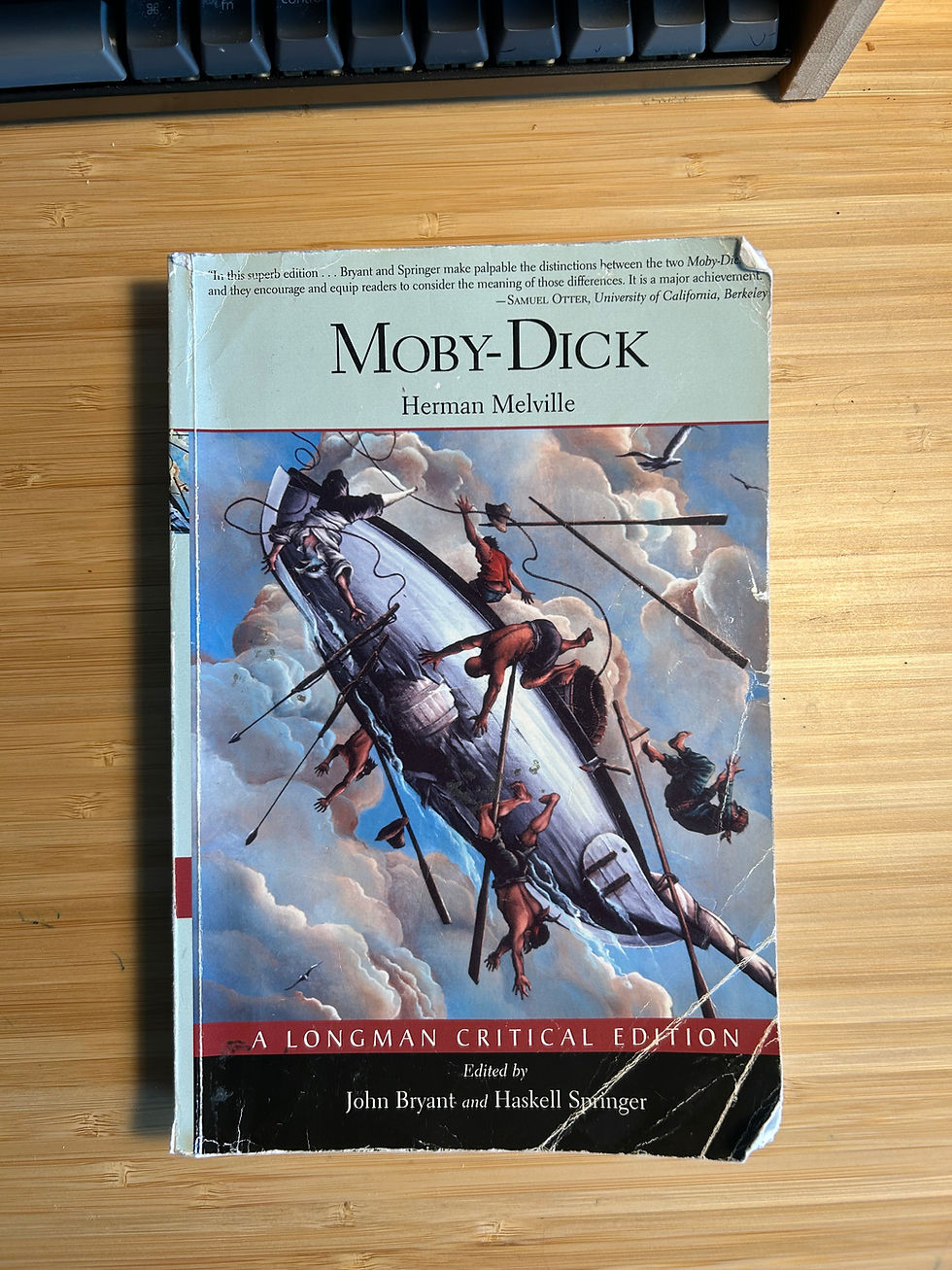
"It is no less difficult to write sentences in a recipe than sentences in Moby-Dick. So you might as well write Moby-Dick."
The life she laid out was hard, solitary, perhaps insane, but held its spiritual rewards in the work itself. My favorite way she phrases this is by dismissing the vision of any project as sub specie aeternitatis (under the aspect of eternity)... a "coherent form of possibilities." She writes that the work is not the vision itself, that the vision is a golem taunting you; you try to reproduce it, but it's impossible. The page is the work, she concludes. "The eternal blankness...which you cover woodenly, ruining it, but asserting your freedom and power to act, acknowledging that you ruin everything you touch but touching it nevertheless...the page in the purity of its possibilities; the page of your death, against which you pit such flawed excellences... the page will teach you to writer." She follows this idea with an enigmatic image.
"Aim for the chopping block. If you aim for the wood, you will have nothing. Aim past the wood, aim through the wood; aim for the chopping block."
The next day I was invited to Ryan's parents house in rural Connecticut, where the following day I was chopping wood in their yard.
By mid-semester, I was deep in Dillard obsession. We were teaching one chapter of Pilgrim a week, giving me a chance to revisit and revel in passages I had sped read in the fall. Anelise felt the one chapter per week was good for digesting the material. "It's a slow burn," she said. When I shared that I just read it in the fall in less than 24 hours and repeated the anecdote about needing to flee my apartment to stare at a tree, she laughed and shouted, "That's insane!" The class was going well. Anelise had asked for my opinion on lessons and encouraged me to lecture. She also taught expository material, some essays from Teaching a Stone to Talk, some essays about Dillard herself, had the students do observation journals; we went on mini class trips to a sunny spot on campus to look at clouds, Morningside Park and Central Park.


Through all this I was starting to glean the method behind the mad genius. I not only felt closer to her work, but felt I was finally embodying the self I had dreamt up when first reading Pilgrim, a self in the physical world, engaging with it and enlightening it with my own words. It helped that Anelise seemed to also embody this spirit of Annie. We coined the term "Dill-Pilled." She'd share an anecdote about how she was picking out trash from a creek near her house or a random fact about the way icicles formed, and I'd be in awe. She was doing it, living it.
Behind the scenes, I had rekindled with my ex, tried to rebuild, only to end it again in March. I was sputtering wildly, was on shaky ground. All I had was Dillard and Riverside park. The weather would start to break. I created an Annie Dillard-inspired playlist on Spotify, adding songs that I felt captured her essence, her weirdness, her themes of consciousness, humanity, and of course, trees and animals.
The connections I started making in life seemed to all run through her. I bought several copies of Pilgrim and gifted them to friends. I once met someone at a bar, and when I told them about the course I was teaching, they said, "No way," and showed me their New York Public Library App with Pilgrim at Tinker Creek second in their queue. I questioned my sanity, but so did Annie, so I felt on the right path. She showed me how following connections in life led you closer to god, or just the beauty and magic of creation. I found wisdom that helped me through this extremely weird and uncomfortable time of my life. Her words became pennies of hope I could carry around in my pocket. I adopted a new philosophy, something I referred to as "monk mode" (and yes, another Spotify playlist) which I got from this quote:
"And then you walk fearlessly, eating what you must, growing wherever you can, like the monk on the road who knows precisely how vulnerable he is, who takes no comfort among death-forgetting men, and who carries his vision of vastness and might around his tunic like a live coal which neither burns nor warms him, but with which he will not part."
Our final class was a trip to her archive at Yale University. We got to flip through her journals, see the notecards that would eventually become Pilgrim at Tinker Creek, read her entries on books she was reading, things she was noticing, thoughts on Thoreau, inserting herself into the canon by challenging his ideas, complaining about her work, about others work, read fan letters and her witty replies, laughed at her doodles. We witnessed a writer at work, deep in her materials. Pens and pencils and all kinds of paper. She seemed to exposit her entire mind out onto the page, filling the deep eternity of its blankness with herself. Everyone left inspired, changed. I haven't journaled the same since.
By summer, I felt stronger, lighter with a clearer sense of self, and more importantly, grateful. She instilled in me a sense that instability was okay, natural even; that so was imperfection and chaos. I felt encouraged by her to, in her own words, "Make connections; let rip; and dance where you can." She granted me the right to question the world around me, to engage with it, study it, speculate and be in awe of it, but ultimately give thanks for it. She taught me that to revel in the wonders of existence is the unique privilege of being human. This all fueled my first ever solo road trip of self-discovery from Florida to Montana, something I never thought I could do. A little late, but whatever. Come fall, I would rent a cottage in the Catskills. When I received the news of her passing, I looked out at the mid-September sun and sighed, but didn't say "oh, how sad." Instead, I felt a small explosion of grief in my stomach, then a wash of a distant sadness came over me. I stayed with it for a moment, nearly cried, and then walked down to the creek nearby and laid a stone on top of another in her honor.
"I am not making chatter," she wrote in Pilgrim. "I mean to change his life."
And you did.
Thank you, Annie.


Comments